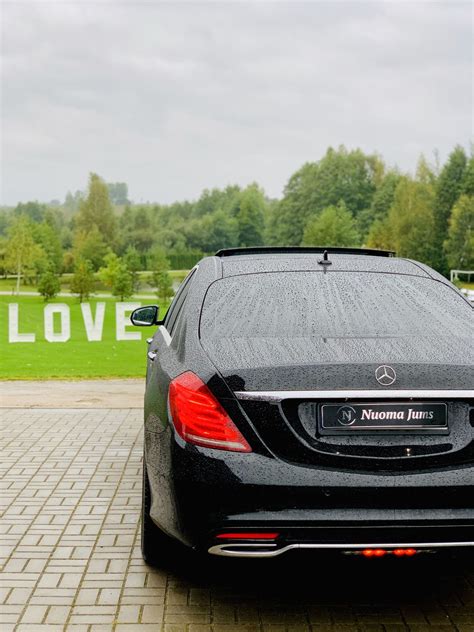
Aštuntojo dešimtmečio viduryje Europa, atstatėsi po karų ir pradėjo džiaugtis gyvenimu. Tai buvo metas, kai nyko valstybių sienos, mokslas žengė septynmyliais žingsniais, o gerovė, rodėsi, niekada nesibaigs. Mercedes-Benz įvertino savo pirkėjų atvirą bei drąsų požiūrį ir tai jiems patiko!
Nepaisant to, kad klasikinė sidabrinė buvo bene populiariausias C123 pirkėjų pasirinkimas, kiekvienas galėjo pasirodyti esąs išskirtinis - būsimiesiems savininkams siūlomų spalvinių variantų skaičius svyravo nuo 25 iki 32, o iš viso per devynerius metus dizaineriai paruošė net 63 spalvas.
"Metallic" tipo dangos ir jų išskirtinumas
"Ypatingųjų spalvų akrilas (vok. - Metallic tipo dangos (vok. Metallic-Lackierungen) - gražios gilios spalvos, kuriomis nudažytas automobilis atrodė itin puošniai. Kiekvienoje grupės spalvų skaičius skirtingais metais kiek kito, tačiau niekada nebuvo mažesnis negu septynios.
Reikia pastebėti, kad ir spalvų pasirinkimu Coupe buvo išskirtinis: jei iki 1980-ųjų gegužės gamintojas Metallic tipo dažais leido padengti tik ne daugiau kaip 15% užsakomų automobilių (ir tai negalėjo būti keturių cilindrų modeliai), o universalų pirkėjams tokias spalvas kaip 172 Antracito pilka, 404 Milano ruda arba 876 Kipariso žalia leista užsisakyti tik 1978-ųjų pabaigoje, tai būsimųjų coupe pirkėjų neribojo niekas, tik jų pačių estetikos jausmas.
Atkreipiame dėmesį, kad dauguma dangų yra sukurtos norint suteikti automobiliui skirtingus atspalvius esant vienam ar kitam apšvietimui. Todėl prietemoje spalva atrodys vienaip, ant sniego kitaip, o kylančios saulės spinduliuose galbūt ir visai netikėtai.
Spalvų panašumai ir jų atpažinimas
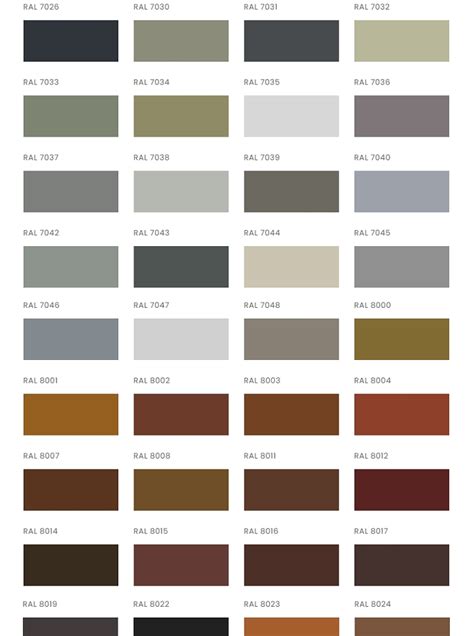
Buvo atvejų, kai vieną spalvą keitė kita labai panaši, pvz. 606 Klevo geltoną ir ją 1979-aisiais pakeitusią 680 Saulės geltoną atskirti nėra paprasta, o 861 Sidabriškai žalia ir 881 Sidabriška usnis tokios panašios, kad tik labai patyręs žinovas pasakys kuria iš jų padengtas automobilis stovi priešais. Tad kartais nepakanka tik vizualiai įvertinti atvaizdą, tenka išsiaiškinti apytikslius gamybos metus, taip atmetant variantus, kuriais konkretus egzempliorius negalėjo būti nudažytas.
Lentelės nuorodose ir žemiau patalpintoje galerijoje pateikiame ilgai ir kruopščiai atrinkinėtus atvaizdus. Tačiau atkreipiame dėmesį, kad lentelėje spalvos tik artimos, tačiau ne identiškos autentiškoms - ne visas spalvas įmanoma korektiškai atvaizduoti kompiuterio ar telefono ekrane.
Pagrindinės spalvos ir jų kodai:
- 040 Juoda (vok. Schwarz, angl. Black)
- 476 Aukso ruda (vok. Goldbraun, angl. Gold Brown)
- 673 Sacharos geltona (vok. Saharagelb, angl. Sahara Yellow)
Mercedes-Benz S klasės istorija ir evoliucija
The Mercedes-Benz S-Class, formerly known as "special class" (German: "Sonderklasse", abbreviated as "S-Klasse"), is a series of full-sized luxury sedans and coupés produced by the German automaker Mercedes-Benz. The S-Class is the designation for top-of-the-line Mercedes-Benz models and was officially introduced in 1972 with the W116, and has remained in use ever since.
In 1981, the two-door, four-seat S-Class, designated as SEC, was introduced, sharing the petrol V8 engines with its four-door version, W126. After the introduction of a new nomenclature scheme, SEC was simply renamed as S-Class Coupé. For the 1996 model year, the coupé was separated from the S-Class line and named as new CL-Class (in line with other two-door models: CLK, SL, and SLK); however, the CL-Class was reintegrated into the S-Class model line (same with CLK becoming E-Class Coupé and Cabriolet).
Pre-World War II Mercedes-Benz followed a nomenclature scheme by which each model would have its own numeric code, tied to the displacement of its engine. The logic was that the bigger the displacement, the more prestigious the car will be. This overall scheme was kept in the postwar time, however as the tooling and production facilities were much more limited, Mercedes-Benz adopted a more practical approach of using the "S" suffix to denote a model that was "Special" or Sonder in German. The figurative use of the word in commerce is to denote a product that is more upmarket than the parent version.
Early usage of the S suffix was applied liberally, for example the 1949-51 170S denoted a W136 car with a more modern chassis and larger body in both sedan can cabriolet types, as opposed to the regular W136 170V and 170D. After 1951, the 170S became the W191 chassis code, as a sedan in petrol and 170DS diesel version. In 1953 a hybrid 170S-D and 170S-V became the discount models in the marque's lineup until 1955. This illustrates a how flagship model will make the transition to an entry model in space of just four years.
Elsewhere the S could be applied to denote a separate bodystyle, like the top range two door W188 300S opposed to the W186 300 limousine. In other times it would be applied to differentiate a facelifted model, as was the case with the W180 220 gaining the S suffix in 1986. A more or less consisted application came about in the 1968 upon the launch of the /8 series, when the S-labelled cars now had their own bodies, chassis and powertrains. This was formalised in 1972 when Mercedes-Benz officially branded its premiere range as the Sonderklasse that included the new W116 sedans and the W107 two door coupes and roadsters.
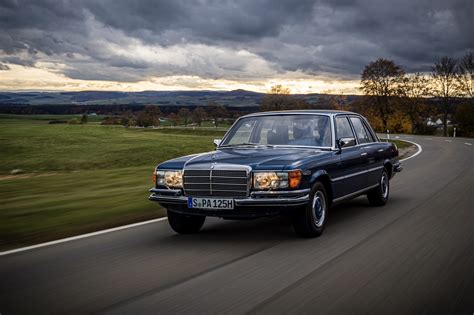
Whilst over the following two decades, the S-Class became an established brand, the nomenclature continued to come under increasing pressure in the 1980s in the unnamed 'standard' range which not only included the predecessors of the E-class, but also the compact W201 sedan, restricted to just the 190 series from 1982 and the W463 off-road G-wagen that began to be sold through regular Mercedes-Benz dealers in 1989. (As opposed to the commercially sold W460 and W461). The belonging of the SL roadster in the S-Class was also questionable, particularly after the launch of the R129 model, which shared many chassis elements with the standard range W124.
The launch of the W201 successor, the W202 in spring of 1993 ultimately forced Mercedes-Benz to completely review the branding of its cars. The W202, unlike the W201, which envisioned to appeal to the younger generation, had more restrained contours to be marketed as a compact sedan, with a range of engines. For this a third, entry level, Compact, or C-Class was created, and to avoid confusion with the existing nomenclature, where C suffix denoted a Coupe body, a prefix was used instead, e.g. C 220. The clientele took the notion well, and in summer of 1993 Mercedes-Benz had the rest of the products undergo a major re-branding into set classes, which were de-facto already in existence: the G-Class, the SL-Class and the newly created E-Class, where the E prefix, was taken for the most commonly used Einspritz, or fuel injection models. (Mercedes Benz withdrew the last carburettors three years prior).
For the W140 S-Class in production this was limited to a formal re-badging, where attributes such as the fuel system, wheelbase and body style were abandoned. Extra information was sometimes affixed to the right-hand side of boot/trunk, denoting the diesel version (TURBODIESEL or later CDI), hybrid version (HYBRID), all-wheel-drive version (4MATIC), AMG or MAYBACH model. The second revision in 2015 allows the suffixes such as d (diesel), e (plug-in hybrid), and the h (mild hybrid) for several years before h was dropped. The two door version was split off into its own CL-class in 1996 in an attempt to create two parallel triumvirates consisting of the S-Class sedans, SL-roadsters and SLK compact roadsters on one side, and the C-compact sedans, CL luxury coupes and CLK compact coupes/cabriolets, also released in 1996.
The W180 line debuted in 1954, and is the first lineup of "Ponton" models retroactively associated with the Mercedes-Benz S-Class. The W180 featured six-cylinder sedan, coupé, and convertible models, and was produced until 1959. It featured the 220S models (sedan, coupé, and cabriolet) powered by a 2.2L straight-6, and came to ten. The "Ponton" lineup included four- and six-cylinder models, but only the six-cylinder W180 line is considered part of the Mercedes-Benz S-Class chronology, as they were the most powerful "Ponton" versions available.
Mercedes-Benz Fintail (German: Heckflosse) is an informal nickname given to Mercedes-Benz vehicles notable for the presence of tailfins. Though never officially designated as such - Mercedes-Benz claimed they were functional and designated them Peilstege, assisting to mark the end of the car in the rear-view mirror. The exterior was designed for the European and North American markets. The W111 was a chassis code given to its top-range vehicles, including four-door sedans, produced from 1959 to 1968, and two-door coupes and cabriolets from 1961 to 1971. The W111, was initially attributed only to six-cylinder cars with 2.2-litre engines. The luxury version with big-block 3-litre engines were given the chassis code W112. The entry-level vehicles with four-cylinder engines were called W110. All three versions W110, W111, and W112, in both two- and four-door bodies, were based on the same unibody structure.
The updated and larger W108/W109 model lines were introduced in 1965. The squarish W108 line included the straight-six M129 engine powered 250S, 250SE, 280S 280SE and 280SEL. During this period, the designation S for "special class" (German: "Sonderklasse) was used for standard carbureted short-wheelbase models; an E for "injection" (German: "Einspritzung"), was added to the 250SE, 280SE and 300SE. only) and 6.3-litre V8 engines (in the SEL model only).
In 1972, Mercedes-Benz introduced the W116 line, the first to be officially called the S-Class. Produced from 1972 through 1980, the W116 series featured four-wheel independent suspension and disc brakes. The 280, 350, and 450 (4.5L version) models featured SE and SEL versions. Production of the W116 totaled 473,035 units. This was a groundbreaking sedan for Mercedes-Benz, and for the first time in the company history, the car had an obvious, blatant and outward emphasis on safety placed above a pure styling viewpoint. These safety features were all newly introduced passenger-car "firsts" on a production vehicle: padded door trim around the windows, heavily padded steering wheel (later to be replaced by an airbag with the Mercedes-Benz abbreviation of SRS standing for the English-language term Supplemental Restraint System), more comprehensive safety padding on the dashboard and around the interior, dual asymmetric windshield wipers, headrests with a center depression to locate the occupant's head in a more central position during a rear impact, a rain-water management system to improve visibility consisting of deep channels on both sides of the windshield and flowing into deeply channeled rain gutters, including similar designs on the side mirrors, rounded body shapes along the edges, such as the tops of the front fenders, etc., designed to ameliorate pedestrian injuries, ribbed rear taillamp lenses which would remain clearer of dirt on the recessed areas, an easy-to-access first aid kit stowed in a recessed compartment on the rear parcel shelf prominently labeled with the universally recognized "cross" symbol which represents "first aid", and several other subtle safety features related to both active and passive safety.
The Mercedes-Benz S-Class is a classic chauffeur driven car, and has frequently been used as standard by car hire companies. The W116 models were large luxury sedans. The W116 was larger on the outside than the W108/W108/W109 series it replaced, but had similar interior capacity, as the additional bulk was driven by several new and aforementioned engineering developments on car safety and occupant protection in a crash. The W116 introduced other improved passive safety features into the vehicle design, including a strengthened vehicle occupant shell. It was one of the first cars to be available with ABS, a driver's airbag supplemental restraint system (but not available at the vehicle's initial launch). The 450SE, then the most powerful model in the W116 lineup, was awarded European Car of the Year in 1974.
1973 was the first model year of the W116 for the US market. Starting in 1975, the W116 was upgraded with a new fuel injection system to comply with revised exhaust emission standards in European markets. A slight power reduction was a result of this update, but in 1978, a series of further engine upgrades restored original performance levels under the new fuel injection systems. Between 1973 and 1977, 997 Special Edition W116 models were made on order by Mercedes. With the W116 models, the V8-engines of the 350/450 SE/SEL models were now regular options. Due to the oil crisis, fuel efficiency was a major concern for engineers, yet they still added the high-performance, limited-production 450 SEL 6.9. This 8-cylinder model, affectionately referred to as simply "the 6.9", boasted the largest engine installed in a postwar Mercedes-Benz up to that time. Every 450 SEL 6.9 featured a self-leveling hydropneumatic suspension, and offered the ABS anti-lock braking system as an option from 1978 onwards.
The W126 series premiered in September 1979, launching in March 1980 as a 1980 model and late 1980 as a 1981 model in the US and Australia replacing the W116 line. The W126 line featured improved aerodynamics and enlarged aluminum engine blocks. In Australia in 1981, the W126 S-Class won Wheels magazine's Car of the Year award. The W126 was manufactured from 1979 through 1991 with a mid-cycle update. Coupé models based on the S-Class were reintroduced with the W126 (380/500 SEC). In December 1980, the W126 introduced a driver side airbag, as patented by Mercedes-Benz in 1971, as well as passenger side airbags (in 1988), seat-belt pretensioners, and traction control. It was the first production car to feature an airbag standard, and as late as 1991 there were only a few other manufacturers in Europe who offered an airbag. The interior featured additional courtesy and reading lamps, along with heated seats and a more advanced climate control system. Although the top of range Mercedes-Benz 450SEL 6.9 of the previous generation was not directly replaced, the W126 carried forward the hydropneumatic suspension of the 6.9 as an option on the 500SEL. A new cruise control system was offered as well. Succeeding the roadster based coupes, the W126 introduced a two-door variant, the SEC coupé. The power plants on the W126 S-Class included straight-6 and V8 engines.
In 1991, the W140 series replaced the W126 line with the first production model assembled in April of that year. The W140 grew in proportions and featured two wheelbase lengths and a shorter-wheelbase W140 coupé. In 1993, Mercedes-Benz model nomenclature was rationalized, with the SE/SEL/SEC cars becoming the S-Class and alphanumerical designations inverted (e.g. both the 500SE and 500SEL became S500 regardless of wheelbase length). In 1995, the W140 received a minor face lift featuring clear turn signal indicator lenses on the front and rear as well as headlamps fitted with separate low- and high-beam reflectors for the US market. Following the mid-year face lift, the W140 coupe and sedan (Saloon) featured Electronic Stability Control.
Mercedes-Benz presented the W220 in July 1998, marketed as a sedan, only. Despite being smaller than the previous generation, the W220 offered more interior space. The W220 introduced air suspension, marketed as Airmatic, as well as a navigation system with center console-mounted screen display, along with its input control system, marketed as COMAND. Other options included keyless entry and ignition, a radar-controlled cruise control system marketed as Distronic and a cylinder shut-off system marketed as Active Cylinder Control.
Consumer Reports classified the W220 model's reliability as "poor," its lowest rating, and called it one of the "least reliable luxury cars;" Edmunds gave the S-Class a 5 out of 5 reliability rating; and MSN Autos gave a rating of 9.0 out of 10. By March 2011, Consumer Reports revised its reliability ratings for the 2001 and 2002 S-Class to "average". In 2002, Mercedes-Benz introduced the world's first preemptive safety system on the W220 with a system marketed as Pre-Safe. The W220 received an exterior refresh with updates to the front fascia. The grille angle was adjusted to a slightly more upright position, and the xenon-discharge headlamps were given a new transparent housing, replacing the earlier opaque versions. The front bumper's lower air intakes were also restyled.
The W220 was available with more engine options than the W126 or W140. The range started with smaller 2.8 (Singapore) then 3.2L 165 kW (224 PS; 221 bhp) V6 motor, which was superseded by an enlarged 3.7 L 180 kW (245 PS; 242 bhp) V6 in the S350. The S430 was powered by a 4.3 L 205 kW (279 PS; 275 bhp) V8 and the S500 was powered by a 5.0 L 225 kW (306 PS; 302 bhp) V8. The S55 AMG was outfitted with a supercharged 5.4 L 368 kW (500 PS; 493 bhp) V8 motor, the S55 AMG 2000/2001 was outfitted with the naturally aspirated 5.4 L 265 kilowatts (360 PS; 355 bhp) V8 motor. In 2001, Mercedes produced a very rare S 63 AMG with a 5 speed automatic transmission and a modified version of the M1...
Naujoji S klasė: išskirtinis pirmasis žvilgsnis su generaliniu direktoriumi Ola Källenius
Novatoriškos išmaniosios sistemos
Pavaizduotos įrangos, funkcijų, savybių ir paslaugų prieinamumas priklauso nuo konkretaus transporto priemonės modelio, individualios komplektacijos ir atitinkamos rinkos. Tam tikrų „Digital Extras“ paslaugų naudojimui būtinas nuolatinis „Digital Extras“ naudojimo sąlygų ir „Mercedes me ID“ naudojimo sąlygų jų galiojančiose versijose priėmimas, nuolatinis transporto priemonės susiejimas su „Mercedes-Benz“ naudotojo paskyra, sutikimas saugoti ir gauti būtiną informaciją tam tikrų „Digital Extras“ paslaugų aktyvavimui susietoje transporto priemonėje ir - kai taikoma - „Digital Extras“ aktyvavimas.
Pasibaigus riboto naudojimo laikotarpiui, „Digital Extras“ galima pratęsti už mokestį „Mercedes-Benz“ parduotuvėje, jei tuo metu jos vis dar siūlomos atitinkamam transporto priemonės modeliui. Be to, kai kurių „Digital Extras“ naudojimui gali būti taikomos papildomos sąlygos ar apribojimai, pavyzdžiui, atskira kliento sudaryta sutartis su trečiosios šalies paslaugų teikėju (pvz., srautinės transliacijos paslaugos, „Comfort Data Volume“ duomenų paketo sutartis, navigacijos funkcijos), papildomų „Digital Extras“ aktyvavimas siekiant užtikrinti pilną funkcionalumą arba pasirinktų trečiųjų šalių produktų naudojimas (pvz., išmanusis telefonas, išmanusis laikrodis). Kaip alternatyva „Comfort Data Volume“, priklausomai nuo jūsų multimedijos sistemos kartos, turi būti naudojamas kliento nuosavas duomenų kiekis (pvz., mobilusis viešosios interneto prieigos taškas). Informaciją apie asmens duomenis, tvarkomus naudojantis „Digital Extras“, rasite „Digital Extras“ privatumo pranešimuose.
Ryšio modulio prijungimas prie mobiliojo tinklo, įskaitant avarinio skambučio sistemą, priklauso nuo atitinkamo tinklo aprėpties ir tinklo paslaugų teikėjų prieinamumo. Taip pat prašome vadovautis nurodymais, pateiktais jūsų transporto priemonės naudojimo instrukcijoje.
„Mercedes-Benz“ S klasė, automobilių inovacijų etalonas, visada buvo nepralenkiama išmaniųjų sistemų srityje. Daugiau komforto, daugiau kontrolės ir daugiau pasitikėjimo kiekvienoje kelionėje. Nuo pažangių MBUX funkcijų iki papildytosios realybės navigacijos, besimokančių sistemų ir pusiau automatizuoto vairavimo - kiekviena funkcija sukurta tam, kad palengvintų jūsų gyvenimą ir užtikrintų aukščiausią saugumo lygį.