The Yanxiang Lantern Festival is a traditional lantern-viewing activity during the Lantern Festival, popular in Yanxiang Village, Quanshang Town, Ninghua County, Sanming City, Fujian Province. It is one of the Fujian Provincial Intangible Cultural Heritage items. The Yanxiang Lantern Festival originated during the Zhengde Period of the Ming Dynasty. The making of the lanterns involves more than ten steps, from gathering materials, splitting bamboo strips, constructing the lantern frame, pasting paper and covering the surface, to painting, writing characters, carving patterns, applying oil, and attaching decorative cutouts.
Yanxiang Village is located in an area where the jurisdictions of Ninghua County, Mingxi County, and Qingliu County intersect. It is surrounded by mountains and has dense forests. The terrain within the village is flat, with fertile farmland, allowing the local people to live and thrive here. Yanxiang was established as a village during the Song Dynasty Tiansheng Period, initially founded by the Liu family. The Yang, Guan, and Zeng families subsequently migrated to the area. Among them, the Yang family are descendants of the Song Dynasty Neo-Confucian scholar Yang Shi. Through the Yuan and Ming dynasties until the Qing Dynasty, Yanxiang experienced a period of great prosperity. It was abundant in products, witnessed a flourishing of culture, and its economy and culture were once the finest in the surrounding region.
The Yanxiang Lantern Festival became popular in Yanxiang Village, Quanshang Town, Ninghua County during the Ming Dynasty Zhengde Period (around 1506). The renowned historian Li Shixiong, in his work the Ninghua County Annals, described the grand spectacle of the Yanxiang Lantern Festival and the exquisite craftsmanship of the lanterns as follows: "Performances are staged and lanterns are displayed, creating a bustling scene day and night. For fifty years, the lanterns have changed with the months, using cut silk and split colors to conceive ideas and imitate objects, as vivid as paintings. It can truly be said to be unparalleled under heaven."
During the Cultural Revolution, the lantern festival was forcibly disbanded, and a large number of lanterns and ceremonial paraphernalia were burned. After the Reform and Opening-up, the lantern festival in Yanxiang Village entered a period of revival. In the early 1990s, Yanxiang Village had over 200 lanterns each year for its festival. Subsequently, the scale and influence of the festival diminished year by year, and it was suspended starting in 2002. It was not until the end of 2008 that Yanxiang Village revived the lantern festival. Starting in 2015, to address the issue of young people from Yanxiang Village working away from home, the three-day lantern festival period was changed from the 13th, 14th, and 15th days of the first lunar month each year to the 5th, 6th, and 7th days.
The Yanxiang Lantern Festival period is held annually from the fifth to the seventh day of the first lunar month. During these three days, large-scale folk activities take place day and night. The activities consist of welcoming the Community God during the day and competing with lanterns at night. Signaling the start with the synchronized firing of divine guns, the procession is led by several large gongs. Twenty-four pairs of strong men follow, carrying wooden ceremonial implements. These are the Sun and Moon, Dragon Head, Moon Axe, Fist Brush, Guan Dao (a type of pole weapon), Book Sword, Interlocking Rings, Five-Flower Cluster, Melon Hammer, Square Interlocking Rings, Western Horns, Palm Fan, Colored Banners, and the "Silence" and "Make Way" plaques, along with a silk-embroidered Ten-Thousand-People Umbrella. Next are various colored banners and several sets of drums and music. Following them are the wooden-carved seal box and incense altar, on which stand four statues of civil and military officials and a bronze incense burner weighing over 20 kilograms. Then come two people holding aloft court censers, burning fine incense inside. Finally, eight men shoulder the Great Divine Sedan, which enshrines statues of the old and new Community Gods. The grand procession for welcoming the Community God tours both the Upper and Lower Villages, receiving offerings from villagers along the route.
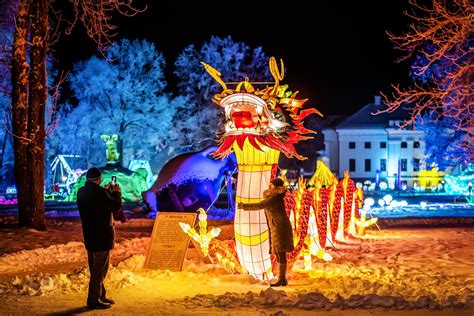
The lantern competition at night is large in scale and rich in content. It also begins with a signal from the divine guns, led by the lanterns of the Imperial Bestowal "Sizhi Hall-Duzhong Neo-Confucianism" lighting the way, with the thunderous sound of giant gongs clearing the path. The twenty-four pairs of ceremonial implements, such as the Sun and Moon and Dragon Head, follow. Next are various hand-held lanterns, including Antiques, Flower Baskets, Flower Books, Eight Immortals, Heavenly Official, Eight Treasures, Parasols, Horizontal Plaques and Vertical Couplets, Guohe Lanterns, Palace Lanterns, and dozens of others depicting birds and beasts. Behind them are the large lanterns carried by each lantern association, with one or two sets of gongs and drums or small percussion accompaniment following each pair. They present over ten ancient stories and scenes such as Peach and Plum Garden, Carp Leaping over the Dragon Gate, Water Surging at Golden Mountain Temple, Mandarin Ducks Swimming in the Lotus Pond, and Phoenix Soaring over Peonies. Particularly noteworthy is the "Paiqiang Lantern" that guides the way for the Community God. The lantern is about 6.67 meters high and about 1.5 meters wide, with a windmill gun muzzle mounted at the top. Its perimeter is covered with carved patterns and paintings, with four large, auspicious four-character idioms on the front and back. It is lit with twenty red candles inside, appearing dazzlingly bright up close and magnificent from afar. Guided by the Paiqiang Lantern, ceremonial implements such as the Imperial Edict, Seal Box, and Parasol escort the large sedan of the Community God. Two statues of the Community God sit solemnly inside the large sedan, with the Taiping Sedan beside it, upon which stand four statues of civil and military officials. Bringing up the rear is the "Houyong Lantern," equal in height to the Paiqiang Lantern, draped in painted cloth depicting dragons and phoenixes and lit with red candles inside. The procession moves along with the harmonious sounds of sheng (a reed pipe instrument) and xiao (a vertical bamboo flute), accompanied by constant drumming and music. At various central points throughout the village, clusters of Liuhe Lanterns, Guohe Lanterns, and Fire Couplets and Fire Plaques are hung to welcome the Community God. Households also hang colorful Spring Welcoming Lanterns at their doorsteps to join the spectacle.
Chinese Lantern Festival - It's all about the lamps
In the past, the lantern festival was primarily organized by clans. There were over ten folk lantern associations, including "Jincheng," "Chuncheng," "Jicheng," "Rongchun," "Chunjin," "Eight Immortals," "Guohe," "Xianglu," "Paiqiang," "Liuhe," "Huoping," and "Fenqian." Villagers were divided into four seasonal groups to participate in the lantern associations. Each group took turns on duty once a year, slaughtering livestock to offer sacrifices to the gods. After the sacrifice, the meat was divided equally among the villagers of the four seasonal groups to take home and enjoy.
The making of Yanxiang lanterns is exquisite, involving over ten steps from material preparation, splitting bamboo into strips, making the lantern frame, pasting paper surfaces, to painting, writing calligraphy, carving patterns, and applying varnish. There is a wide variety of lantern styles. Besides the full set of ceremonial lanterns and fixed hanging lanterns, there are also large lanterns carried in parades, such as flower vat lanterns, stacked bowl lanterns, and shed lanterns. The small lanterns made by each household are too numerous to count. There are also rules for lantern making. Large lanterns like the ceremonial lanterns are made by the elders of the three major village clans-Yang, Liu, and Guan-who gather their clan members to construct them. Small lanterns, however, are made by each household themselves or commissioned from craftsmen.
Inheritance and Protection
Inheritance Value
The folk attribute of the Yanxiang Lantern Festival integrates ancestor worship and folk beliefs, reflecting the richness of folk wisdom and the significant characteristics of Hakka culture and clan culture, holding typical significance for Hakka lantern culture. Its artistic and craft value, its rich research value for Hakka clan culture, its profound value in fostering neighborhood emotional communication, and its rigorous value in imparting traditional etiquette and moral education all play important roles in the study of Hakka cultural ecology, in building the Ninghua Hakka cultural brand, in advocating Socialist Core Values, and in creating a Harmonious Society.
Inheritance Figures
Representative inheritors of the Yanxiang Lantern Festival: Yang Daoyuan, Yang Deqi, Yang Xiangxin, Yang Yingqiu.
Protection Measures
The protecting entity for the "Yanxiang Lantern Festival" project: Ninghua County Quanshang Town Yanxiang Village Farmers' Water Users Association. On May 9, 2019, officials from the Ninghua County Cultural Center and the County Intangible Cultural Heritage Protection Center visited Quanshang Central Primary School and presented the school with a plaque designating it as the "Intangible Cultural Heritage Yanxiang Lantern Making Skills Workshop," marking the official establishment of the Yanxiang lantern making skills inheritance base at Quanshang Central Primary School.
Social Activities
On February 22, 2018 (the seventh day of the first lunar month), the lantern festival kicked off in Yanxiang Village, Quanshang Town, Ninghua County. On February 8, 2019, the lantern festival kicked off in Yanxiang Village, Quanshang Town, Ninghua County. The CCTV 'Chinese Villages' Film Crew visited Yanxiang Village for filming.
Declared Region: Ninghua County, Sanming City, Fujian Province
Protecting Entity: Ninghua County Quanshang Town Yanxiang Village Farmers' Water Users Association
tags: #yannkiniskas #zibintu #festivalis